Marola.
Insights16th May, 2026 min read
Revolutionizing Yoga: How AI-Powered Auto Detection and Correction is Transforming Your Practice
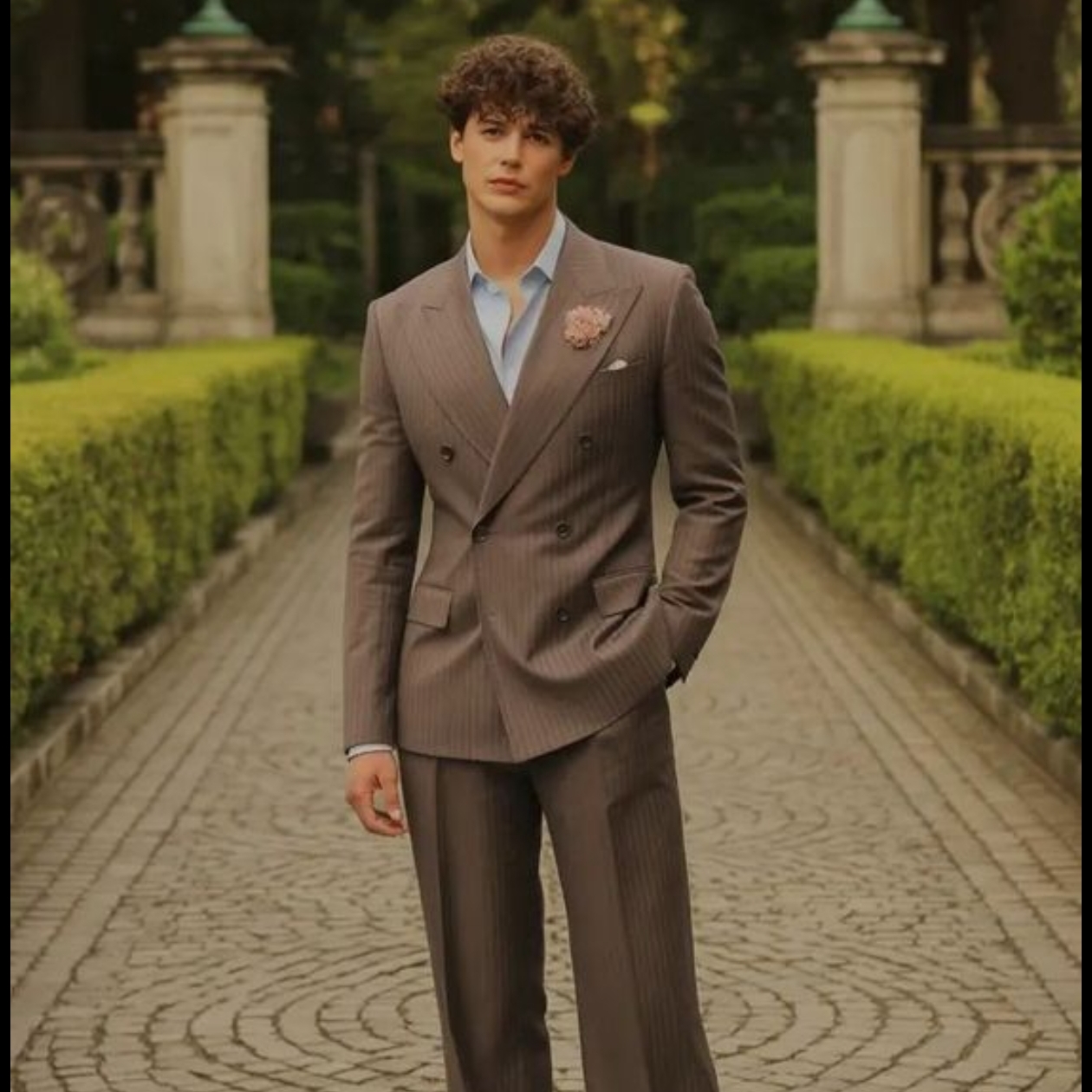
Yoga at home with your own pace and flexibility
Rewinding a few years back, we were suddenly locked-down inside our residences for a really long time and the outside world had gone quiet. That’s when the internet came to our rescue, whether it was teaching us how to cook restaurant-style meals, binge watching movies and tv shows and that’s when I found out about some legendary shows like Stranger Things, Jack Ryan, Friends, Family Man and many many more…
A few of those people took the responsibility to post online content to influence millions on personal health and well-being. The result? Increased home workouts and specifically the sessions migrated to online mode. Hundreds of people could join a zoom meeting from all over the world at their own convenience and practice the workouts. But you might ask, where does yoga fall into this?
Yoga was one of those open, mass online sessions that welcomed people regardless of experience, often led by an experienced practitioner. However, issues arose when inexperienced participants practiced with improper techniques, combined with the instructor’s limited ability to monitor and correct every individual. This can sometimes do more harm than good, leading to unnecessary strain on muscles and joints.
Since the era of ChatGPT, AI has massively boomed in the industry and fueled the global shortages of GPU, RAM and SSD (thanks ChatGPT)! On the contrary, thanks to smaller, lightweight models, your device’s camera can become an AR camera by turning it into your personal yoga trainer, no Wi-Fi required. It automatically detects your posture and nudges you toward doing it right. I also know that this type of projects are flooded in Github that has been recreated by a huge amount of people. What sets it apart is the auto-correction feature combined with dynamic thresholds that adjust the posture difficulty based on the user’s performance.
If this still interests you, I’ll happily serve you the details that’ll be easy to digest!
Prerequisites
It’s only for the technical section of the blog. The initial part of the blog covers the details on principles of yoga and the core idea behind the works. Feel free to improve the ideas with your own touch of creativity. Remember, there’s no limit to one’s imagination!
Basic understanding of Python and machine learning.
Beginner-level knowledge of OpenCV for image and video processing.
Familiarity of ML frameworks such as Tensorflow, Scikit and PyTorch.
Helpful Links
An IEEE conference paper, “A Comparative Study of Classification AI Models for Yoga Pose Detection and Correction”, has been published with me contributing as a co-author. It focuses on a comprehensive evaluation and comparison of multiple classification-based AI models using a private yoga pose dataset. In addition to benchmarking model performance, the study introduces a novel framework for yoga pose correction that integrates real-time posture analysis with a dynamic difficulty threshold.
DOI: https://doi.org/10.1109/ICRITO66076.2025.11241748
You can find the full source code implementation in the following Github repository and Kaggle notebook:
Github: https://github.com/SAM-DEV007/Yogamrit
Kaggle: https://www.kaggle.com/code/samyak03/yogamrit-models
Table of contents
Introduction: Why Yoga?
The International Yoga Day is celebrated annually all around the globe on 21st June, which was proposed to the UN in 2014 by the Indian PM Narendra Modi to promote health, balance, stress relief and healthier lifestyles. Yoga can offer physical and mental health to all the age groups, and can possibly become an integral part towards the healing of the body.
The term “Yoga” which is currently being recognized all over the world is said to be a modern form of Hatha yoga that largely consists of the asanas, the yoga postures, which in turn differs largely from the traditional yoga that focused on meditation and release from worldly attachments. It is said that yoga can also influence the spiritual well-being. In yogic philosophy, the chakras, disk or wheel in Sanskrit, are imagined as energy sources that revolve around the spine of the body.
Crown Chakra (Sahasrara) - It is at the crown of the head. It aligns us with universal consciousness and higher consciousness.
Third Eye Chakra (Ajna) - Between the eyebrows and represents inner vision and intuition.
Throat Chakra (Vishuddha) - Throat centre. It shows governing expression and voice authority.
Heart Chakra (Anahata) - Mid-chest. It represents love, connection, and compassion.
Solar Plexus Chakra (Manipura) - It is on the upper belly, and gives self-control and confidence.
Sacral Chakra (Svadhisthana) - It is lower belly, that governs feelings and creativity.
Root Chakra (Muladhara) - It is at the spine’s end. It is the grounding and stability.
It was earlier emphasized to practice early in the morning during the sunrise, often starting with Surya Namaskar, which is a sequence of 12 postures with synchronized breathing to warm up and energize the body as a salute to the Sun. But, with the fast and unpredictable world, it may not be suitable to a huge group of age groups to practice. There is no right time to practice it, and can adopted by anyone with different lifestyles. But, it is advised to avoid yoga immediately after meals for obvious reasons.
Each one of our Yogas is fitted to make man perfect even without the help of the others, because they have all the same goal in view. The Yogas of work, of wisdom, and of devotion are all capable of serving as direct and independent means for the attainment of Moksha. “Fools alone say that work and philosophy are different, not the learned.” The learned know that, though apparently different from each other, they at last lead to the same goal of human perfection.
Source: The Complete Works of Swami Vivekananda, Volume 1, Book: Karma-Yoga by Swami Vivekananda
Yoga is all about finding peace and balance in your own way. There’s no single path to relaxation because we’re all different. Each person’s body and mind have their own rhythm and needs. What calms one person might not work for another, and that’s okay. The beauty of yoga is that it meets you where you are, allowing you to connect with yourself in whatever way feels right.
The Origins
Hindu-scholars have argued that Yoga has Indo-Aryan Vedic origins, and may have influenced Jainism and Buddhism, but the first official evidences point towards the early first millennium BCE. This is referred to as the linear model. Another model, often favored in Western scholarship, is called the synthesis model which defines yoga as a synthesis of indigenous, non-Vedic practices with Vedic elements.
The earliest references of yoga practices was mentioned in texts preserved from the Vedic period between c. 1200 and 900 BCE. The yoga practices were mentioned as early as ca. 900 BCE from the Jain tradition. There is no evidence or consensus on yoga’s origins other than its development in ancient India. The yoga concepts emerged in the texts dating between c. 50 and 200 BCE which includes the early Buddhism texts, Upanishads, Bhagavad Gita and Shanti Parva. In the classical era (c. 200 BCE — 500 CE), one of the key works include the Yoga Sutras of Patanjali. The Yoga Sutras are also said to be influenced by the Sramana traditions of Buddhism and Jainism. In the middle ages (500–1500 CE), it led to the developments of satellite yoga traditions. It refers to various systems and practices that developed and branched out, or orbited, from the original, core philosophical concept of yoga. The primary historical example of such tradition is Hatha Yoga.